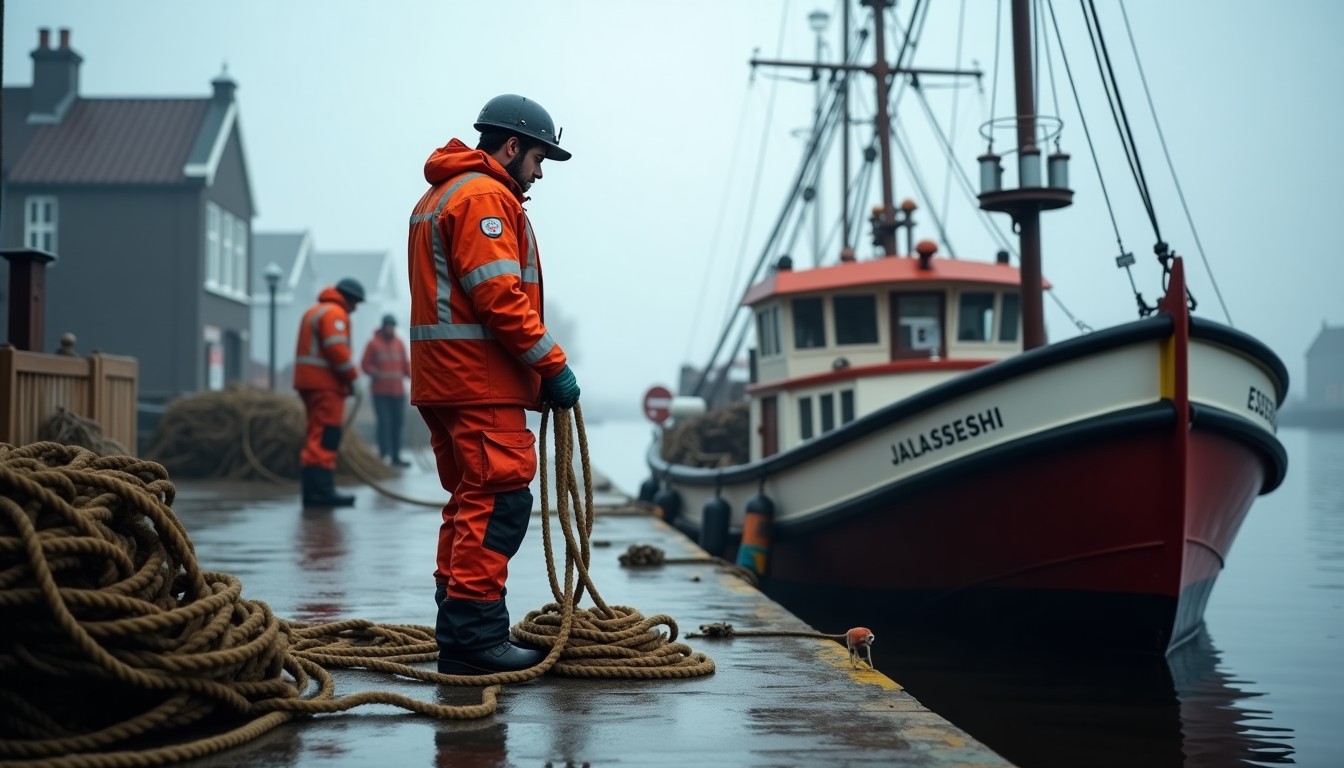
If you work on a fishing boat or in a port, general Dutch courses will get you part of the way. Most schools teach everyday and business Dutch, not maritime terms. You will likely need to ask providers about industry-specific material or add a tutor who can build vocabulary around your work. Below are realistic options from our listings, with notes on who each one suits.
What maritime Dutch actually involves
Fishing and port work have their own vocabulary: parts of a vessel, weather and tide terms, safety instructions, catch handling, and paperwork for auctions and inspections. No standard course covers all of this. The practical route is to build a general base at A2 or B1, then layer sector words on top with a tutor or in-company training. If you need a formal diploma, Staatsexamen NT2 Programma I is B1 and is accepted for work and vocational study. Programma II is B2. Check the official source for what your specific job or permit requires.
Schools that can adapt to industry needs
The Square Mile Amsterdam runs business and conversational Dutch with fast-track corporate programs and intensives. It fits fishermen who need quick, practical speaking for crew communication and can ask for maritime examples in class. It does not fit someone who wants a fixed maritime curriculum, because the school does not advertise one.
Berlitz Brussels uses the Berlitz Method for immersive training, in person and online, with business and conversational focus. This suits people working out of Belgian ports who want intensive speaking practice. It is less suitable if you need a low-cost group course, since Berlitz formats tend to be private or small-group and you should check the provider for pricing.
Learn Dutch in Maastricht offers small groups of 6 to 12, private, and in-company options with practical, communicative teaching. The in-company route is the most realistic way to get maritime vocabulary built into a course. It does not fit someone who wants a ready-made fishing industry package off the shelf.
ROC Nijmegen is a regional ROC offering NT2 spreek- en gespreksvaardigheid plus the Entree Anderstaligen NT2 program for non-native MBO students. It fits people near Nijmegen who want formal, in-person NT2 training, possibly combined with vocational study. It does not fit someone outside the region or someone who needs online lessons.
Sagènn Language Institute focuses on speaking confidence for expats in Amsterdam with a small-scale, personal approach. Good if you are based in Amsterdam and want to speak more freely before adding technical terms. Less useful if you need documented maritime content.
Comparing a few options
| Option | Type | Levels | Format | Best for |
|---|---|---|---|---|
| The Square Mile Amsterdam | School | A1 to B2 | Online, in person | Fast-track professionals needing quick speaking gains |
| Berlitz Brussels | School | A1 to B2 | Online, in person | Intensive private or small-group training near Belgian ports |
| Learn Dutch in Maastricht | School | A1 to B2 | Online, in person | In-company training where maritime terms can be added |
| ROC Nijmegen | School | A1 to B2 | In person | Formal NT2 route with vocational study |
| Dutch Academy Eindhoven | School | A0 to B1 | Online, in person | Beginners who want fast practical progress |
Fit scores: The Square Mile Amsterdam 81/100, Berlitz Brussels 79/100, Learn Dutch in Maastricht 78/100, ROC Nijmegen 76/100, Dutch Academy Eindhoven 77/100. These are editorial scores, not user ratings.
Adding a tutor for maritime vocabulary
A tutor is often the fastest way to get terms you actually use on deck or at the auction. On our tutor list, Verified Pro means 3,000+ lessons and a 4.9+ rating on the platform. Examples include Shivana R., Martijn S., and Jason Reef. Ask each tutor before booking whether they can prepare maritime material. None of them advertise a fishing-specific course, so this depends on the individual.
Levels and official requirements
Under the 2021 Civic Integration Act, the standard inburgering route is B1, with exams in reading, listening, writing and speaking plus KNM. A municipality can allow A2 after substantial effort. Older obligations used A2. For naturalisation, the language requirement is A2 in 2026, with a move to B1 planned but no confirmed start date. For work and vocational study, Staatsexamen NT2 Programma I is B1. Programma II is B2. Check the official source for your situation.
Practical steps
Start with a general course at A2 or B1, then add sector vocabulary. Use our path finder to narrow options by level and format. If you want to compare cities, see cities. For exam preparation, see NT2 prep. For integration rules, see inburgering. Always ask providers directly about maritime content, group size, and price, since none of this is published consistently.
How we know this: the options come from The Dutch Directory listings checked on 2026-10-12, and fit scores are editorial, not user ratings.