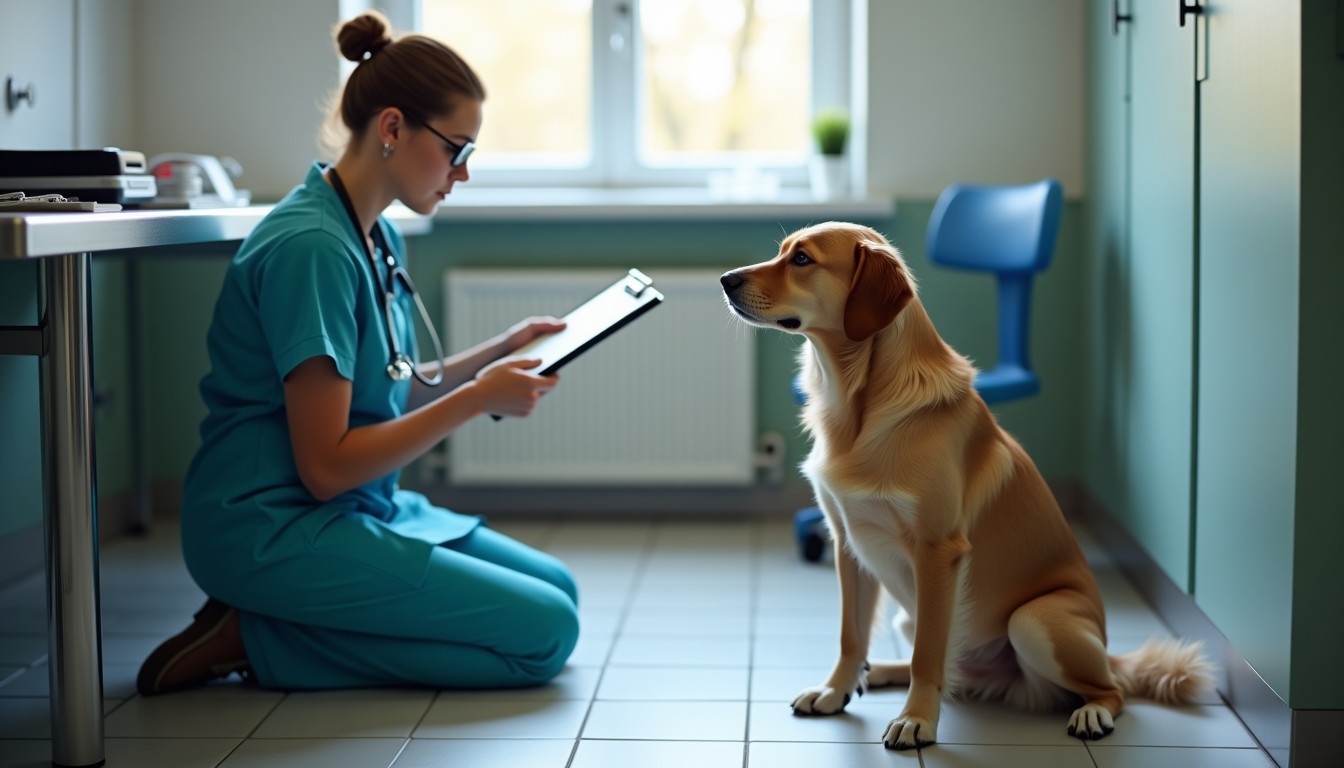
Most Dutch courses are built for general fluency, not for a consulting room. If you are a vet, vet nurse or animal care assistant who deals with Dutch-speaking clients, the practical answer is to pick a course with strong speaking practice at B1 to B2, then add a tutor or self-study block for consultation language and animal vocabulary. No provider in our listings runs a dedicated veterinary Dutch course, so plan for that gap rather than expecting one course to cover everything.
What the job actually demands
Client consultations are the hard part. You need to ask clear questions, understand a worried owner's description, explain what you are going to do, discuss cost and consent, and give aftercare instructions. That is spoken Dutch under mild pressure, with vocabulary that general courses rarely touch: species and breeds, symptoms, medication, anaesthesia, euthanasia, insurance and payment.
Written Dutch matters too, for records and referral letters, but most staff get by with a smaller written range than spoken range. Aim for solid B1 first, then push toward B2 for the parts of the job where misunderstanding is costly.
Courses that fit professionals
Regina Coeli in Vught and Eindhoven is the strongest fit in our listings for someone who needs fast, intensive progress. One-to-one teaching suits professionals who can take a block of time off and want to be corrected constantly. It is expensive in time as well as money, and it is not a veterinary course, so bring your own word list. Check the provider for current prices and formats.
Direct Dutch Institute in The Hague has taught highly educated expats and professionals since 1985. Group courses there suit someone living or working near The Hague who wants steady evening or daytime progress alongside the job. If you are based in Eindhoven or Rotterdam, the commute may outweigh the benefit.
Babel Utrecht is well regarded for professional Business Dutch and NT2 preparation, with a practical focus. It fits staff who want a structured route toward a recognised level and are comfortable in a group. It is a general professional course, not a clinical one, so do not expect animal terminology from the syllabus.
Lest Best in Utrecht and Rotterdam is known for a strong speaking focus and good results at B2 and above. That makes it a sensible choice for a vet who already handles basic Dutch and needs to become fluent and confident in consultations. It starts at B1, so complete beginners should look elsewhere first.
STE Languages in Eindhoven has over 30 years of experience and is CEDEO-certified, with strong in-company training. It suits animal care staff in the Eindhoven tech region whose employer will arrange training. Ask whether they will tailor content to your sector.
The healthcare certificate to know about
The CNaVT PTGE is a Belgian certificate for Dutch proficiency in healthcare and care-sector professions, at B2. It is the closest formal benchmark to your work in our listings, and it is useful if you want evidence of professional-level Dutch. It is an exam, not a course, and it is healthcare-wide rather than veterinary, so treat it as a target to prepare for, not a syllabus. Check the official source for exam content and registration.
Comparing the main options
| Option | Type | Levels | Format | Best for |
|---|---|---|---|---|
| Regina Coeli | School | A1 to B2 | Online and in person | Fast one-to-one progress |
| Direct Dutch Institute | School | A1 to B2 | Online and in person | Educated professionals near The Hague |
| Babel Utrecht | School | A2 to B2 | Online and in person | Structured professional Dutch |
| Lest Best | School | B1 to B2 | Online and in person | Speaking confidence at B2 |
| CNaVT PTGE | Exam | B2 | Online (BE) | A healthcare-sector certificate |
Fit scores are editorial: Regina Coeli 89/100, Direct Dutch 88/100, Babel 86/100, Lest Best 83/100, CNaVT PTGE 80/100.
Filling the vocabulary gap
General courses will not teach you to say that a dog has been vomiting since yesterday. A verified tutor is the most flexible way to cover that. Stephanie, Anouk and Jacqueline V. are examples from our tutor list; ask any tutor before booking whether they will work from your own clinic vocabulary and role-play consultations. You can browse more on /dutch-tutors.
Build a personal glossary as you go: species, body parts, symptoms, drugs, procedures, billing. Bring it to every lesson.
Levels and official requirements
For immigration and citizenship, the rules are separate from your job. Under the 2021 Civic Integration Act, the standard route is B1, with reading, listening, writing and speaking exams plus KNM; a municipality can allow A2 after substantial effort. Naturalisation requires A2 in 2026, with a move to B1 planned but no confirmed start date. Staatsexamen NT2 Programma I is B1 and Programma II is B2. Check the official source for your situation, and see /inburgering and /nt2-prep.
Practical next steps
Decide your current level honestly, then choose: an intensive one-to-one block if you need speed, a group course if you need routine, a tutor if you need vocabulary. Use the /tools/path-finder to narrow the list, and /cities if location decides it. Ask every provider whether they will adapt material to veterinary work, and confirm prices directly with them.
How we know this: the options come from The Dutch Directory listings checked on 2026-10-19, and fit scores are editorial, not user ratings.